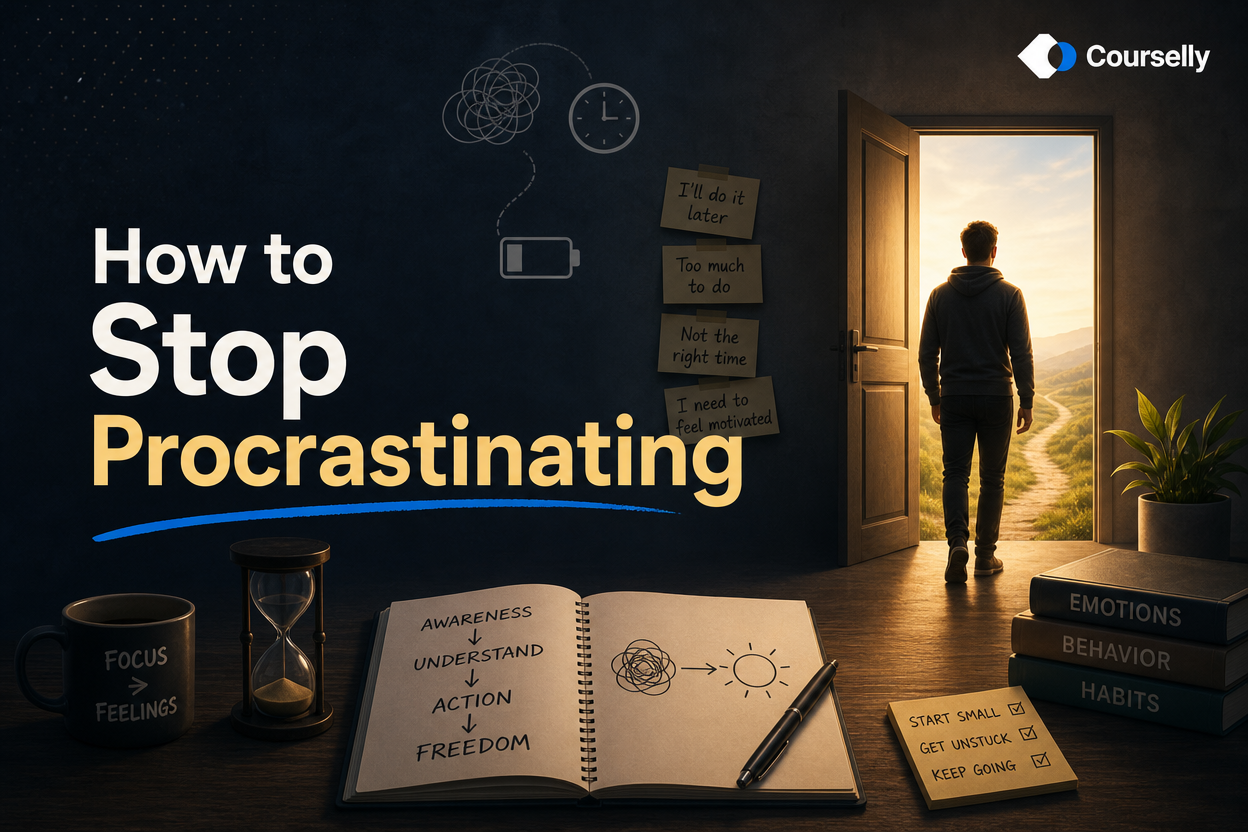
How to Stop Procrastinating
In this course, you'll learn why procrastination actually happens (it's not laziness) and practical strategies that work — based on real psychology, not willpower mythology. For people who know what to do but keep not doing it.
About this course
Procrastination is one of the most misunderstood problems in personal development. Most advice treats it as a willpower failure or a character flaw, prescribing “just do it” or “develop discipline.” This advice doesn’t work because it misunderstands what procrastination actually is.
This course teaches procrastination through what research and real experience actually show. Procrastination is fundamentally an emotional regulation problem, not a time management problem. Understanding this changes everything about how to address it.
You’ll learn what procrastination actually is, why even motivated people procrastinate on things they care about, the specific emotional dynamics that trigger procrastination, and concrete strategies that work for different procrastination patterns. We cover the psychological foundations, then the practical applications — what to do when you’re stuck, how to start when starting feels impossible, and how to build patterns that reduce procrastination over time.
We’re honest about what’s possible. You won’t become a procrastination-free person — that’s not realistic. But you can significantly reduce how much procrastination affects your important work and learn to recover from procrastination episodes quickly rather than letting them spiral.
This course assumes you have specific things you want to make progress on but find yourself avoiding. If you’re procrastinating on this course, you’re our target audience.
Who is this course for?
This course is designed for:
People who know what they should be doing but keep avoiding it
Professionals struggling with important but non-urgent work
Students putting off studying or assignments
Creators procrastinating on their creative work
Anyone whose self-criticism about procrastination has made it worse
People who’ve tried “discipline” or “willpower” approaches without lasting success
You should have specific work or projects you procrastinate on. Generic procrastination isn’t the focus — applied procrastination to real situations is. You should also be willing to look honestly at emotional patterns, not just behavioral ones.
How does the learning work?
This course is structured for understanding plus application:
Psychology-based lessons (10–15 minutes)
Each lesson covers a specific aspect of procrastination based on what actually works.
No shame-based approach
We don’t moralize about procrastination. It’s a normal human problem with real solutions.
Specific to procrastination patterns
Different people procrastinate differently. We cover the major patterns and what works for each.
Honest about limits
Some procrastination is normal. Some is signal of bigger issues. We distinguish.
Practical strategies for real situations
Concrete approaches you can apply this week, not vague encouragement.